Nzambani Primary School, located in Nzambani Location, Mtito Andei Division, Kibwezi East Sub-County, Makueni County, serves a population of 511 pupils (251 girls and 260 boys).
The school’s Health Club consists of 64 active members from Classes 4–8. Originally established during a WASH (Water, Sanitation, and Hygiene) project that phased out in 2012, the club has continued to thrive independently. Members are recruited annually, ensuring sustainability and continuity of hygiene initiatives within the school.
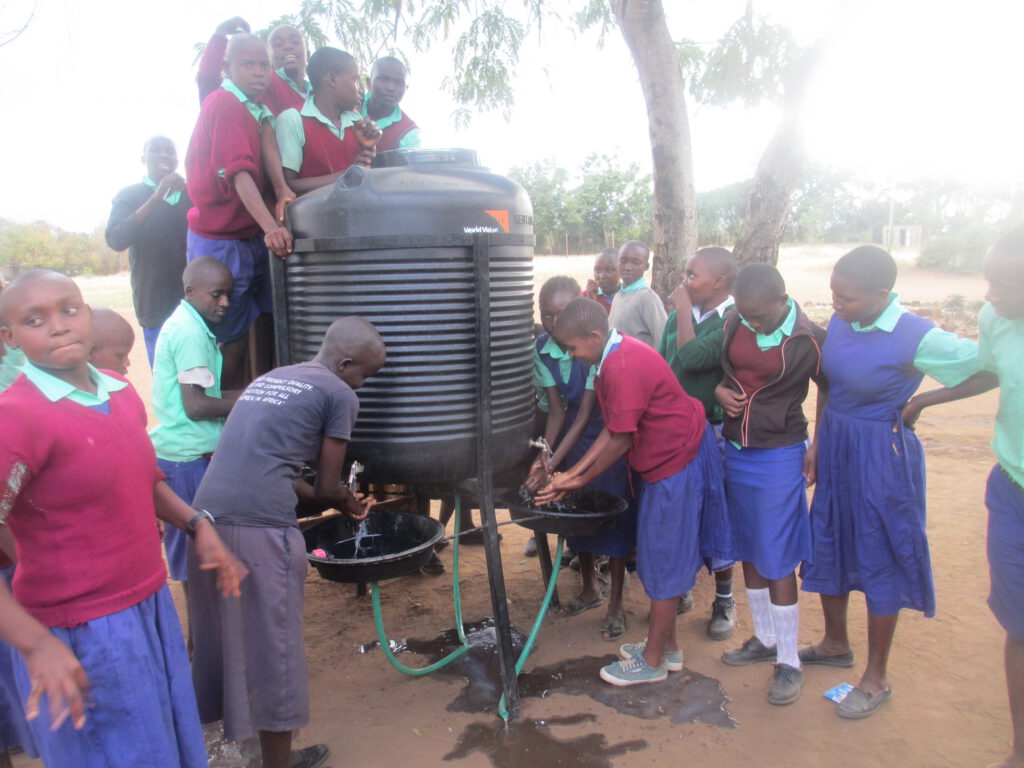
Through funding from Nairobi Kitchen Festivals, the school received two large-capacity handwashing stations strategically placed near latrines and dining areas. These facilities have significantly improved hygiene practices, enabling multiple pupils to wash their hands at once and reducing waiting time.
The Health Club Patron, Mr. Maundu, plays a key role in training students on proper handwashing techniques and safe drinking water practices. As a result, handwashing after latrine visits and before meals has become a consistent habit among pupils.
The school benefits from two rainwater harvesting tanks constructed with support from partner organizations. Additionally, it is connected to the Komboiyo borehole water project serving the Nzambani area. Due to reduced rainfall and declining borehole water levels, rationing has occasionally been necessary, highlighting the importance of sustainable water management solutions.
The project supports two primary schools and surrounding communities, positioning schools as centers for hygiene education. Teachers are empowered to educate students on handwashing at critical times, proper latrine use, and safe water handling.
Future improvements include enhanced drainage systems and linking water access to tree-growing sites to prevent mud accumulation and promote environmental conservation through tree planting.
This initiative demonstrates a sustainable, community-centered approach to improving hygiene, health awareness, and environmental stewardship in rural schools.